

Thursday, December 1, 2022

Wednesday, November 30, 2022

Monday, January 24, 2022

Sunday, September 26, 2021
Global Warming. The Sun. Solar Flares. Is our Sun, young or old? What will it happen when the Sun die?...
Global Warming. The Sun. Solar Flares.
Is our Sun, young or old?...
What will it happen when the Sun die?...

How old is the Universe? About 13.8 Billion Years Old.
How old is the Milky Way Galaxy?
About 13.4 Billion Years Old.
How old is our Sun? About 4.6 Billion Years Old.
What will our Sun look
like after it dies?
Scientists have made
predictions about what the end will look like for our Solar System, and when
that will happen. And humans won't be around to see the final act.
Previously, astronomers thought it would
turn into a planetary nebula – a luminous bubble of gas and dust – until
evidence suggested it would have to be a fair bit more massive.
An international team of astronomers
flipped it again in 2018 and found that a planetary nebula is indeed the most
likely solar corpse.
The Sun is about 4.6 billion years old –
gauged on the age of other objects in the Solar System that formed around the
same time. Based on observations of other stars, astronomers predict it will reach
the end of its life in about another 10 billion years.
There are other things that will happen
along the way, of course. In about 5 billion years, the Sun is due to turn into
a red giant. The core of the star will shrink, but its outer layers will expand
out to the orbit of Mars, engulfing our planet in the process. If
it's even still there.
One thing is certain: By that time, we
won't be around. In fact, humanity only has about 1 billion years left unless
we find a way off this rock. That's because the Sun is increasing in brightness
by about 10 percent every billion years.
That doesn't sound like much, but that increase in brightness will end life on Earth. Our oceans will evaporate, and the surface will become too hot for water to form.
We'll be about as kaput as
you can get. I hope this information may begin to illustrate your ideas about Global Warming... Later on, I shall explain...
It's what comes after the red giant that
has proven difficult to pin down. Several previous studies have found that, in order for a bright planetary
nebula to form, the
initial star needs to have been up to twice as massive as the Sun.
However, the 2018 study used computer
modeling to determine that, like 90 percent of other stars, our Sun is most
likely to shrink down from a red giant to become a white dwarf and then end as
a planetary nebula.
"When a star dies it ejects a mass of
gas and dust – known as its envelope – into space. The envelope can be as much
as half the star's mass. This reveals the star's core, which by this point in
the star's life is running out of fuel, eventually turning off and before
finally dying," explained astrophysicist Albert Zijlstra from
the University of Manchester in the UK, one of the authors of the paper.
"It is only then the hot core makes
the ejected envelope shine brightly for around 10,000 years – a brief period in
astronomy. This is what makes the planetary nebula visible. Some are so bright
that they can be seen from extremely large distances measuring tens of millions
of light years, where the star itself would have been much too faint to
see."
The data model that the team created
actually predicts the life cycle of different kinds of stars, to figure out the
brightness of the planetary nebula associated with different star masses.
Planetary nebulae are relatively common
throughout the observable Universe, with famous ones including the Helix
Nebula, the Cat's Eye Nebula, the Ring Nebula, and the Bubble Nebula.
They're named planetary nebulae not
because they actually have anything to do with planets, but because, when the
first ones were discovered by William Herschel in the late 18th century, they
were similar in appearance to planets through the telescopes of the time.
Almost 30 years ago, astronomers noticed
something peculiar: The brightest planetary nebulae in other galaxies all have
about the same level of brightness. This means that, theoretically at least, by
looking at the planetary nebulae in other galaxies, astronomers can calculate
how far away they are.
The data showed that this was correct, but
the models contradicted it, which has been vexing scientists ever since the
discovery was made.
"Old, low mass stars should make much
fainter planetary nebulae than young, more massive stars. This has become a
source of conflict for the past 25 years," said Zijlstra
"The data said you could get bright
planetary nebulae from low mass stars like the Sun, the models said that was
not possible, anything less than about twice the mass of the Sun would give a
planetary nebula too faint to see."
The 2018 models have solved this problem
by showing that the Sun is about the lower limit of mass for a star that can
produce a visible nebula.
Even a star with a mass less than 1.1
times that of the Sun won't produce a visible nebula. Bigger stars up to 3
times more massive than the Sun, on the other hand, will produce the brighter
nebulae.
For all the other stars in between, the
predicted brightness is very close to what has been observed.
"This is a nice result," Zijlstra said. "Not only do we now have a way to measure the presence of stars of ages a few billion years in distant galaxies, which is a range that is remarkably difficult to measure, we even have found out what the Sun will do when it dies!"
Be safe, be healthy, take good care, God bless.
Starry.
Friday, September 10, 2021

Wednesday, March 25, 2020
Entered into the Tunnel to the Unknown, a Real Mystery...
Entered into the Tunnel to the Unknown, a Real Mystery...

NASA Wants a New Space Telescope to Hunt Asteroids
That May Threaten Planet Earth.

Humanity Will Slam a Spacecraft into an Asteroid
in a Few Years to Help Save Us All.

This NASA graphic shows how the Double Asteroid Rendezvous Test (DART) will crash into a moonlet of the asteroid Didymos in 2022. (Image credit, NASA)

Thanks for Reading our Interesting Articles!
If you care, you may Read My Older Posts.
If you care, you may Read My Older Posts.
Starry.
Monday, December 9, 2019

Wednesday, March 13, 2019
Happy 10th Anniversary in Blogland!!
Hi Folks, Welcome Aboard!

I am thrilled to admit that I began to write My Blogs
-as a therapeutic approach to keep my mind active and make good friends.
I am a Christian mom & grandmom of my New York family
with 3 grandchildren.
with 3 grandchildren.
My hubby Retired from his Medical Practice -as a Physician Surgeon.
Then, we may travel more, if God allows. I'm a poet, freelance writer, lyricist, artist, animal & wildlife lover, advocate, just to give you
a little glimpse of me.
a little glimpse of me.
God shows me the way, and He is the source of my existence.
I used to travel and teach (ESL) English Overseas. Well, I would like to inspire with my creativity, and talk about Life in General, Nature, Animals, Art, Poetry, Music, Tales, Random Thoughts, etc.
These kind of topics are just the beginning about me. If you want, you may post your heartfelt comments, and I´ll reply as soon as I can.
If you wish, you may visit My Public Facebook Page.
I call it, "Starry Moonlight Universe."
This year is My 10th Anniversary in Blogland, 2009-2019.
God bless you! Welcome Aboard!
Poet Starry.
Wednesday, December 5, 2018
Mind Blowing! How Old is the Universe?
Mind Blowing! How Old is the Universe?...
"BIG BANG"


How old is the Universe? About 13.8 Billion Years Old.
How old is the Milky Way Galaxy? About 13.4 Billion Years Old.
How old is our Sun? About 4.6 Billion Years Old.


How old is our Planet Earth? About 4.5 Billion Years Old.

 6 meters Sea Level Rise. NASA Information, 2018.
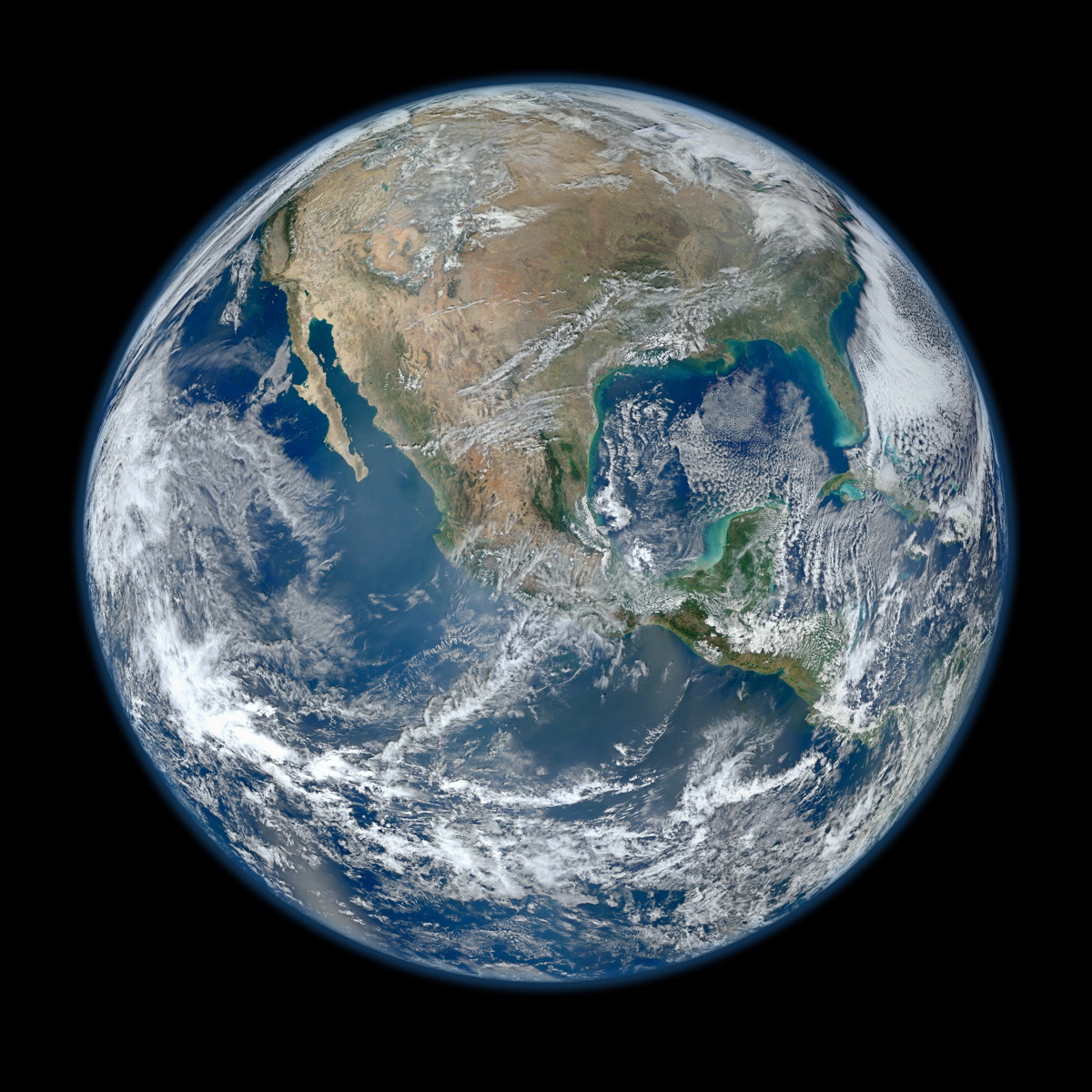
Earth, a blue marble by NASA.

Life appeared in our planet no less than 3.8 billion years ago.
We are running out of time...
HAPPY HOLIDAYS EVERYONE!!
Tuesday, November 13, 2018
NASA discovered the Oldest Star in the Universe.
In 2018, there was a discovery of the Oldest Star in the Universe, 13.5 billion years old,
called 2MASS J18082002-5104378, a remaining material of the original Big Bang.

called 2MASS J18082002-5104378, a remaining material of the original Big Bang.

WOW!! I'll be back with more news...
STARRY.
Sunday, September 9, 2018
Have a Blessed Sunday & Season Ahead!!
HI READERS,
I'm glad to have received amazing comments in my interesting BLOG LESSONS about
"OUR NATURAL ENVIRONMENT," and to know you really enjoyed surfing
around my older posts...Go ahead and continue doing it...

Yes! Go back and keep reading my older posts,
so that you'll learn from my articles a great deal.
May you all Have a Lovely Season!
Until we write again...
POET STARRY.
Saturday, March 17, 2018
TIME FOR A BREAK.
HI READERS,
I'm glad to have received amazing comments in my interesting BLOG LESSONS about
OUR NATURAL ENVIRONMENT, and to know that you really enjoyed surfing
around my older posts...
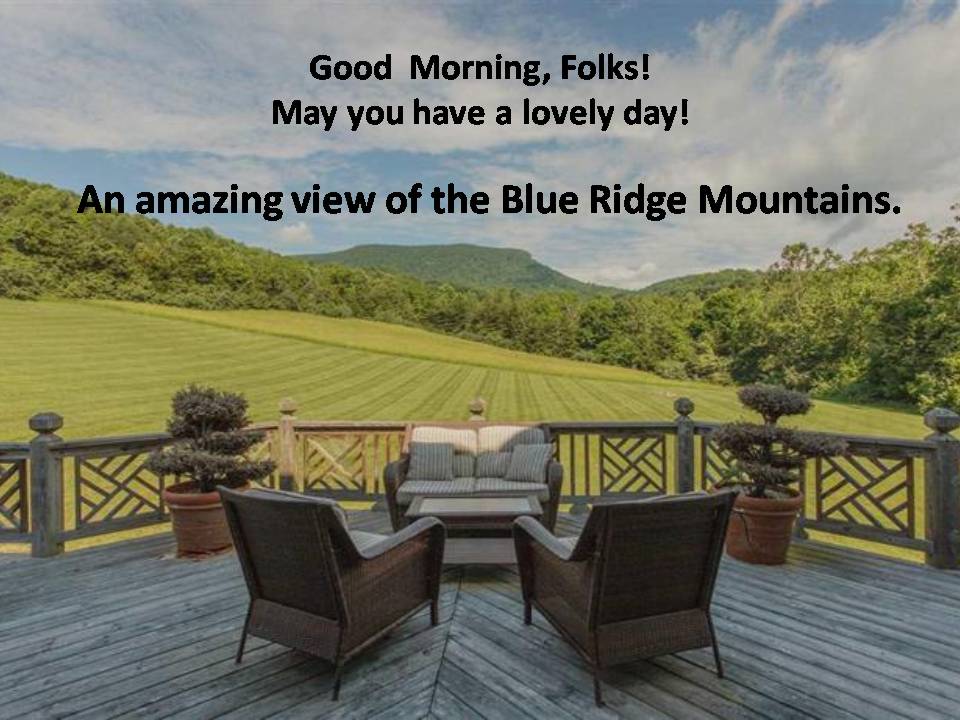
Yes! Go back and continue reading my older posts,
so that you'll learn from my articles a great deal.
Sadly, this BLOG RETIRED for awhile -due to personal issues.
Sadly, this BLOG RETIRED for awhile -due to personal issues.
May you all Have a Lovely Season!
Until we write again...
Poet Starry.
Monday, January 1, 2018

Friday, June 23, 2017
The Earth Natural Resources are Not Endless.
"The Earth Natural Resources are Not Endless."
The ecological footprint measures human demand on nature, i.e., the quantity of nature it takes to support people or an economy. It tracks this demand through an ecological accounting system. The accounts contrast the biologically productive area people use for their consumption to the biologically productive area available within a region or the world (biocapacity). In short, it is a measure of human impact on Earth's ecosystem and reveals the dependence of the human economy on natural capital.
The ecological footprint is defined as the biologically productive area needed to provide for everything people use: fruits and vegetables, meat, fish, wood, fibers, absorption of carbon dioxide from fossil fuel use, and space for buildings and roads. Biocapacity is the productive area that can regenerate what people demand from nature.
Footprint and biocapacity can be compared at the individual, regional, national or global scale. Both footprint and biocapacity change every year with number of people, per person consumption, efficiency of production, and productivity of ecosystems. At a global scale, footprint assessments show how big humanity's demand is compared to what planet Earth can renew. Global Footprint Network calculates the ecological footprint from UN and other data for the world as a whole and for over 200 nations. They estimate that as of 2013, humanity has been using natural capital 1.6 times as fast as nature can renew it. Our Planet Earth is NOT ABLE to SUSTAIN these growing numbers.
Ecological footprint analysis is widely used around the Earth in support of sustainability assessments. It can be used to measure and manage the use of resources throughout the economy and explore the sustainability of individual lifestyles, goods and services, organizations, industry sectors, neighborhoods, cities, regions and nations. Since 2006, a first set of ecological footprint standards exist that detail both communication and calculation procedures. The latest version is the updated standards from 2009..
The root of many early forms of civilization, agriculture has been a primary reason for anthropization. In order to cultivate food or breed animals, land needs to be altered to support these activities. This could mean that soil is tilled or structures are built in order to facilitate the agriculture.
These activities can lead to soil erosion, pollution (pesticides, greenhouse gas emissions, etc.), and subsequently -habitat fragmentation, and overall -an increased ecological footprint. It is also worth noting that the line between agriculture and industry often overlaps, and many of these effects take place as a result of industry as well.

Especially -with approximately 7.5 BILLION HUMANS inhabiting the Earth, this typically aligns with an increase in residences worldwide. Over the years, land has been built upon in order to meet the needs and wants of humans. This can range from small villages to massive factories, water parks to apartments. The process of urbanization and the development of human residences can significantly affect the environment. Not only does the physical space of buildings fragment habitats and possibly endanger species, but also it fundamentally alters the habitat for any other living being. For some species, this effect can be inconsequential, but for many this can have a dramatic impact. The biosphere is very much interconnected, and this means that if one organism is affected, then as a result -the other organisms within this ecosystem and food chain are also affected.
As well, within the last century, with any urbanized area there also needs to be roads to support transportation. This transportation is a continued source of pollution, and the roads are a large source of soil erosion.
In order to support humans, industrial buildings and processes are apparently essential. To create more urban development, and to aid agriculture, many products need to be processed, refined, or constructed. The key component to this is that in order to have factories, the materials used to create a product need to be gathered. For the wide range of products that have been created and refined in this anthropological age, there is a plethora of substances that are harvested. Many of these materials are non-renewable (e.g. fossil fuel, metal ores, etc.) and the harvest of these results in relatively permanent anthropization. For resources that are depended on in high quantity, this can also mean temporary depletion or damage to the source of the resource (e.g. depletion or pollution of fresh water reserves, improper or inefficient silviculture, etc.). Even sustainable or renewable industrial anthropization still affects the environment. While the resource in question may not be in jeopardy, the harvest and processing of this can still cause severe change and damage to the whole environment.
To power the ever-growing human race, energy is needed. Power-harvesting structures are built to harness energy, such as dams, windmills, and nuclear reactors. These sources of energy ultimately fuel the rest of anthropological activity and are essential in this way. However, many of these methods have consequences. With dams, construction aside, they can cause flooding, habitat fragmentation, and other effects. With nuclear reactors, they have a lasting effect in that typically a lifespan of one of these is around 50 years, -and afterwards, the nuclear waste needs to be dealt with and the structure itself needs to be shut down and cannot be used further. To safely dispose of this even low-level waste can take hundreds of years, ranging upwards with increased radioactivity. To produce, and -as a result of this production of energy, it requires a lot of anthropized land.
Obviously the change in population has a direct effect on the anthropological impact, but changes in technology and knowledge have greatly changed anthropization throughout the Holocene. The tools that have been developed and the evolution of the methods that humans use in order to anthropize have changed drastically. For example, the Great Pyramids in Egypt were not constructed by some large machine, instead by thousands of humans. They were still able to build massive monuments, but the efficiency, and also the environmental damage -as a result of their efforts- is much different than today. This is just an example. However, it does show that the environmental effect of modern anthropization is generally greater, not just because of the sizable increase in population when comparing today to ancient times. The pollution and loss of biodiversity was largely natural, not man-made, and the anthropization existed on a much lower level. As the over-population of the Earth continues to increase -for the foreseeable future, this anthropization will continue to evolve.
The ecological footprint measures human demand on nature, i.e., the quantity of nature it takes to support people or an economy. It tracks this demand through an ecological accounting system. The accounts contrast the biologically productive area people use for their consumption to the biologically productive area available within a region or the world (biocapacity). In short, it is a measure of human impact on Earth's ecosystem and reveals the dependence of the human economy on natural capital.
The ecological footprint is defined as the biologically productive area needed to provide for everything people use: fruits and vegetables, meat, fish, wood, fibers, absorption of carbon dioxide from fossil fuel use, and space for buildings and roads. Biocapacity is the productive area that can regenerate what people demand from nature.
Footprint and biocapacity can be compared at the individual, regional, national or global scale. Both footprint and biocapacity change every year with number of people, per person consumption, efficiency of production, and productivity of ecosystems. At a global scale, footprint assessments show how big humanity's demand is compared to what planet Earth can renew. Global Footprint Network calculates the ecological footprint from UN and other data for the world as a whole and for over 200 nations. They estimate that as of 2013, humanity has been using natural capital 1.6 times as fast as nature can renew it. Our Planet Earth is NOT ABLE to SUSTAIN these growing numbers.
Ecological footprint analysis is widely used around the Earth in support of sustainability assessments. It can be used to measure and manage the use of resources throughout the economy and explore the sustainability of individual lifestyles, goods and services, organizations, industry sectors, neighborhoods, cities, regions and nations. Since 2006, a first set of ecological footprint standards exist that detail both communication and calculation procedures. The latest version is the updated standards from 2009..
The root of many early forms of civilization, agriculture has been a primary reason for anthropization. In order to cultivate food or breed animals, land needs to be altered to support these activities. This could mean that soil is tilled or structures are built in order to facilitate the agriculture.
These activities can lead to soil erosion, pollution (pesticides, greenhouse gas emissions, etc.), and subsequently -habitat fragmentation, and overall -an increased ecological footprint. It is also worth noting that the line between agriculture and industry often overlaps, and many of these effects take place as a result of industry as well.

As well, within the last century, with any urbanized area there also needs to be roads to support transportation. This transportation is a continued source of pollution, and the roads are a large source of soil erosion.
In order to support humans, industrial buildings and processes are apparently essential. To create more urban development, and to aid agriculture, many products need to be processed, refined, or constructed. The key component to this is that in order to have factories, the materials used to create a product need to be gathered. For the wide range of products that have been created and refined in this anthropological age, there is a plethora of substances that are harvested. Many of these materials are non-renewable (e.g. fossil fuel, metal ores, etc.) and the harvest of these results in relatively permanent anthropization. For resources that are depended on in high quantity, this can also mean temporary depletion or damage to the source of the resource (e.g. depletion or pollution of fresh water reserves, improper or inefficient silviculture, etc.). Even sustainable or renewable industrial anthropization still affects the environment. While the resource in question may not be in jeopardy, the harvest and processing of this can still cause severe change and damage to the whole environment.
To power the ever-growing human race, energy is needed. Power-harvesting structures are built to harness energy, such as dams, windmills, and nuclear reactors. These sources of energy ultimately fuel the rest of anthropological activity and are essential in this way. However, many of these methods have consequences. With dams, construction aside, they can cause flooding, habitat fragmentation, and other effects. With nuclear reactors, they have a lasting effect in that typically a lifespan of one of these is around 50 years, -and afterwards, the nuclear waste needs to be dealt with and the structure itself needs to be shut down and cannot be used further. To safely dispose of this even low-level waste can take hundreds of years, ranging upwards with increased radioactivity. To produce, and -as a result of this production of energy, it requires a lot of anthropized land.
Obviously the change in population has a direct effect on the anthropological impact, but changes in technology and knowledge have greatly changed anthropization throughout the Holocene. The tools that have been developed and the evolution of the methods that humans use in order to anthropize have changed drastically. For example, the Great Pyramids in Egypt were not constructed by some large machine, instead by thousands of humans. They were still able to build massive monuments, but the efficiency, and also the environmental damage -as a result of their efforts- is much different than today. This is just an example. However, it does show that the environmental effect of modern anthropization is generally greater, not just because of the sizable increase in population when comparing today to ancient times. The pollution and loss of biodiversity was largely natural, not man-made, and the anthropization existed on a much lower level. As the over-population of the Earth continues to increase -for the foreseeable future, this anthropization will continue to evolve.
Until we write again.
Poet Starry.
Saturday, September 10, 2016
This Blog Retired. I'm a Desert Island. Read My Older Posts, if you Wish.
This Blog Retired.
I'm a Desert Island.
Read My Older Posts, if you Wish...
They are interesting posts. (Click to enlarge photos)

Read My Older Posts, if you Wish...
They are interesting posts.

Read My Older Posts, if you Wish...
They are interesting posts.
I think I have already written enough,
and covered special topics
of paramount importance.
It's about time to do good things,
in order to prevent extinction...
Actions speak louder than words.

Sadly, I'm going to a Journey of no return...
I'm a Desert Island with a lion's heart.
Nice meeting you, world!!
Sad Starry.
Friday, January 8, 2016
The Lessons in This Blog will Go on a Season Break.
The Lessons in This Blog will Go on a Season Break.
If you Wish to Contact me, Write your Comment here.
Please, Include Your Email, so that I might be able to Reply...
Thanks in advance for reading my posts,
and showing your kindness!
Your gentle friendship was given to me as a real blessing from God to my heart.
As a gift to you in return for the New Year 2016,
I'll include a poem that I wrote awhile ago.

If you wish, you may place my poem in a wooden frame,
just to decorate some of your home walls.
I really love Country Style for my own home!
You may visit My Artistic Corner Blog at anytime, if you want to...
ALL MY BLOGS ARE LISTED IN MY COMPLETE PROFILE.
I am so glad to have met you all, dear readers.
I hope you come back to visit me again...
I hope you come back to visit me again...
God's Peace be with you all.
Hope, Peace & Love,
POET STARRY.
Friday, December 4, 2015
"Do NOT KILL MOTHERS!! Their BABIES will Become ORPHANS."
"Do NOT KILL MOTHERS! Their BABIES will Become ORPHANS.


Be a Candle in the Dark with a Compassionate Heart!
Let me be outspoken, something of paramount importance, and predicate some facts!
I am unable to hide my artistic mind and soul, or preserve my inner thoughts -inside an invisible grave- which crave to come out to the light at the end of a dark tunnel. The outlook of the stormy tempest overburdened my feeble harmony making my spirit crash, or be carried away by an overflowing wind. My life has been overdue. It is about time to pay the bills in full. Metaphorically speaking, it looks like the wind was raging, then the sea would fly into a rage making sailing harder or even impossible. Can you row a boat against the wind?... Well, this is what my life has been all about, rowing against the wind. The wrong doers outnumbered the good ones, and I got deeply confused about who was right, or who was wrong.
I have always had my own moral values, and it seems as if I was misunderstood...
I have always had my own moral values, and it seems as if I was misunderstood...
The worst kind of pain is when you are smiling just to stop the tears from falling.
MY TEARS WILL FLOOD THE WORLD...
I DON'T WANT TO LIVE IN A WORLD WITHOUT ANIMALS.
EXTINCTION IS FOREVER.

I AGREE WITH HER GREAT MESSAGE.

Majestic Elephants, Endangered Species. Do NOT BUY IVORY!
Elephants' tusks belong to them.
Extinction will be forever.

BABY ELEPHANTS, ORPHANS PROJECT IN AFRICA.
It'll take 7 to 8 years to release an elephant to the Wild.
Do NOT KILL THEIR MOTHERS!!

African Elephants live in a Family of Love & Respect.

Heartbroken Baby Orphan Elephant mourns her Dead Mother.
Evil doers killed her mom for the ivory trade.

Orphan baby elephant mourns her dead mother, and stays with her.
Evil doers killed her mom for the ivory trade.

Baby Orphan Elephant refused to leave her dead mother.
She cried to death. The baby saw the murder of her mom.
Evil doers killed her mom for the ivory trade.
Humans are the worst predators, the most evil on Planet Earth.

Giraffes are also Endangered Species in Africa.
They are in danger, because of the deadly trophy hunt.

RHINOS ARE ALSO ENDANGERED SPECIES
ON THE BRINK TO EXTINCTION.
THEY ARE ONLY 600 RHINOS LEFT IN AFRICA.
In this photo, the Orphan Baby Rhino was looking at her dead mother.
She also witnessed when her mom got killed. The baby refused to leave her mom.
Evil doers killed her mom for the horn trade in Africa.

Baby Orphan Rhino lost her mom, and she refused to leave her alone.
You can clearly see -by looking at this sad image- how much this baby loved her mom.
Evil doers killed her mom for the horn trade.

Baby fawn sleeps next to her dead mom pretending or dreaming that she is still alive.
The fawn refused to leave her dead mother. Cruel Hunters killed her mom.
DO NOT KILL MOTHERS!! THEIR BABIES WILL BECOME ORPHANS.

PHOTO OF A DEAD MOTHER DOG WITH HER PUPPIES.
SHE WAS RUN OVER BY A BUS.
HER PUPPIES WOULD NOT LEAVE THEIR MOM,
and THEY EVEN FED MILK FOR DAYS OVER MOTHER'S DEAD BODY.
DO NOT KILL MOTHERS!! THEIR BABIES WILL BECOME ORPHANS.

ZERO TOLERANCE FOR ANIMAL CRUELTY!!
ZERO TOLERANCE FOR ANIMAL ABUSERS!!
ZERO TOLERANCE FOR BABY & CHILDREN ABUSERS!!
BELIEVE ME! I AM NOT AFRAID TO DIE...
THIS IS MY LAST POST FOR THIS YEAR 2015.
HAVE A MERRY CHRISTMAS WITH THOSE YOU LOVE!!
HAVE A HAPPY NEW YEAR 2016!!
WE PRAY FOR A BETTER WORLD WITH BETTER PEOPLE...
I AM A SOLDIER IN THE ALMIGHTY ARMY OF GOD.
I AM A CHRISTIAN MOTHER & GRANDMOM TOO.
I LOVE MY CHILDREN & GRANDCHILDREN!
I AM A SOLDIER IN THE ALMIGHTY ARMY OF GOD.
I AM A CHRISTIAN MOTHER & GRANDMOM TOO.
I LOVE MY CHILDREN & GRANDCHILDREN!
ACTIONS SPEAK LOUDER THAN WORDS.
GOD'S PEACE BE WITH YOU ALL.
THANK YOU FOR READING MY POSTS!!
UNTIL WE WRITE AGAIN.
POET STARRY.
Thursday, November 19, 2015
SUMMER SWALLOW.
SUMMER SWALLOW. GOLONDRINA DE VERANO.
 Thanks for caring and for asking about these magnificent birds, my friends!
Yes! I think they migrate from San Francisco, California to South America back and forth. They travel thousands and thousands of kilometers and miles to live in Summer Time all year round. So, in other words, when the cool weather hits in California, these birds will fly away and migrate to the southern part of South America, where they find REFUGE.
Can you believe they are all over the place around my window and private terrace?
 I see them flying happily around my place in a skyline building on the top floor. You see I cry tears of joy when I see them here. They are called, "GOLONDRINAS" in Spanish. I LOVE THEM WITH ALL MY HEART & SOUL!!
I Love Birds & Golondrina de Verano...
Thank you for reading my posts!!

Yes! I think they migrate from San Francisco, California to South America back and forth. They travel thousands and thousands of kilometers and miles to live in Summer Time all year round. So, in other words, when the cool weather hits in California, these birds will fly away and migrate to the southern part of South America, where they find REFUGE.
Can you believe they are all over the place around my window and private terrace?

I Love Birds & Golondrina de Verano...
Thank you for reading my posts!!
Have a Blessed Season!
Until we write again...
Poet Starry.
Friday, October 9, 2015
"SAVE THE WHALES BEFORE IT'S TOO LATE!"
"SAVE THE WHALES BEFORE IT'S TOO LATE!


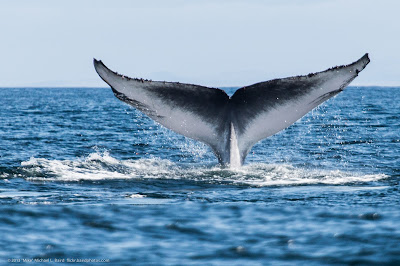


The title says it all, "Save the Whales before it's too late!"
I include the Link to the Website which is dedicated
to help Save the Whales. CLICK to VIEW their Webpage:
www.savethewhales.org

They compose and sing SONGS to make people aware
about our natural environment, which is so vulnerable
with its endangered species in a way to extincion -due
to human overpopulation, human actions, killing
and destroying animals' natural habitats.

They compose and sing SONGS to UNITE PEOPLE
and SAVE THE WHALES.
They sing SONGS TO HEAL OUR PLANET EARTH.
Their SONGS are also Online in You Tube.

Now, I expose the Bad News...
Beautiful Whales and Beautiful Dolphins Massacre
in Faroe Island, Europe is happening every year.

Japan and other Countries round the World have been Hunting Whales for Centuries.

Whaling or Whale Hunting, and numbers of Whales being Killed each year,
are sending Whale populations under
THE THREAT TO EXTINCTION.

Whales Population in Antarctic, South Atlantic, have been dramatically reduced due to human hunting.

If Whales go Extinct one day, they will only be
skeletons of them displayed in Museums of
Natural Science round the world.

Please, Save the Whales, Save the Species,
SAVE OUR PLANET EARTH!!
Come and Help us Save the Whales
Before they Disappear from Our Planet Earth.
Until we write again...
Poet Starry.
Subscribe to:
Posts (Atom)