Wednesday, December 5, 2018

Mind Blowing! How Old is the Universe?

Mind Blowing! How Old is the Universe?...
"BIG BANG"
Theory of the Big Bang.
How old is the Universe? About 13.8 Billion Years Old.
How old is the Milky Way Galaxy? About 13.4 Billion Years Old.
How old is our Sun? About 4.6 Billion Years Old.
How old is our Planet Earth? About 4.5 Billion Years Old.
Earth, a blue marble by NASA.
6 meters Sea Level Rise. NASA Information, 2018.
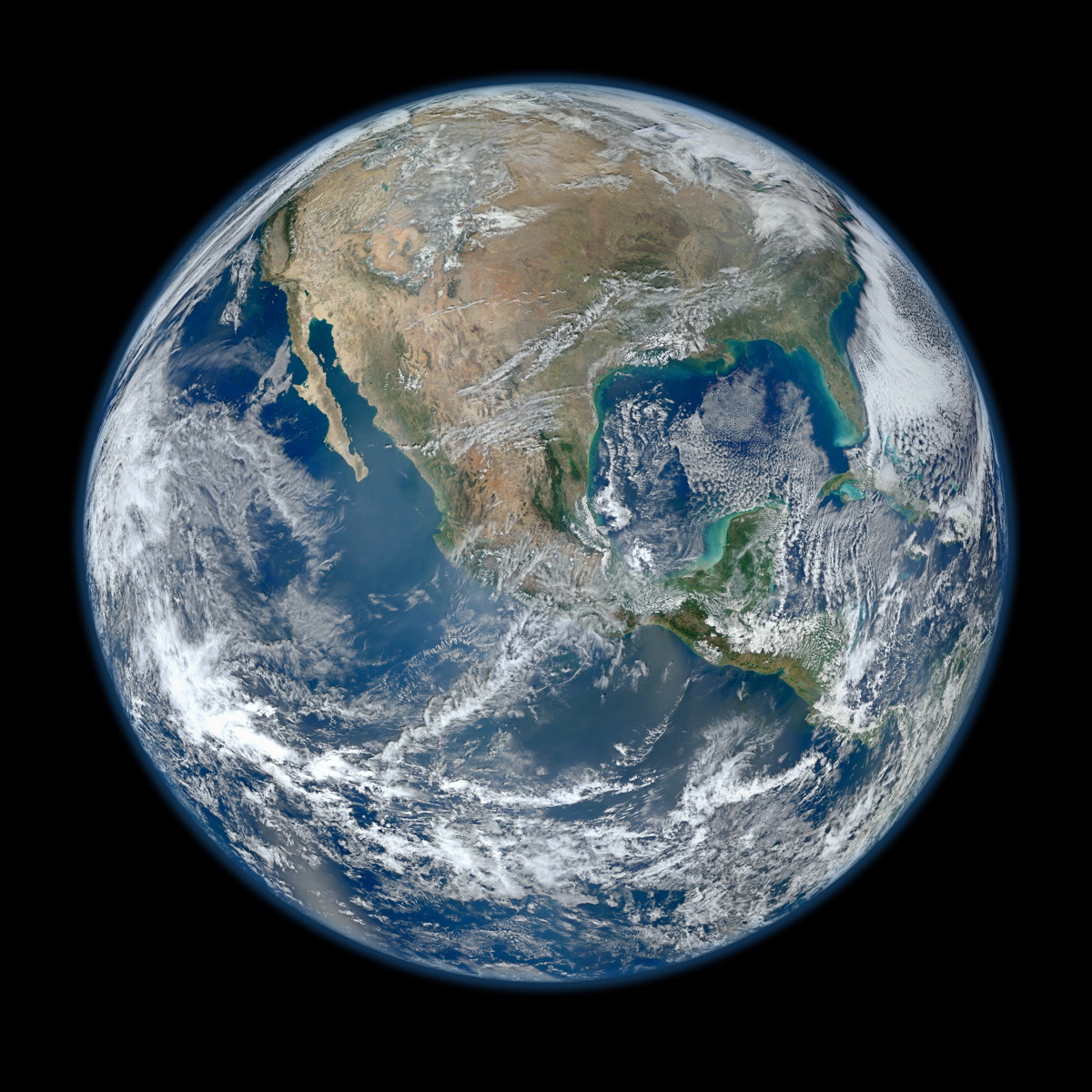
Life appeared in our planet no less than 3.8 billion years ago.
We are running out of time...
HAPPY HOLIDAYS EVERYONE!!

Tuesday, November 13, 2018

NASA discovered the Oldest Star in the Universe.

In 2018, there was a discovery of the Oldest Star in the Universe, 13.5 billion years old, 
called 2MASS J18082002-5104378, a remaining material of the original Big Bang.
WOW!! I'll be back with more news...
STARRY.

Sunday, September 9, 2018

Have a Blessed Sunday & Season Ahead!!

HI READERS,

I'm glad to have received amazing comments in my interesting BLOG LESSONS about 
"OUR NATURAL ENVIRONMENT," and to know you really enjoyed surfing 
around my older posts...Go ahead and continue doing it...
Yes! Go back and keep reading my older posts, 
so that you'll learn from my articles a great deal.
May you all Have a Lovely Season!
Until we write again...

POET STARRY.

Saturday, March 17, 2018

TIME FOR A BREAK.

HI READERS,

I'm glad to have received amazing comments in my interesting BLOG LESSONS about 
OUR NATURAL ENVIRONMENT, and to know that you really enjoyed surfing 
around my older posts...
Yes! Go back and continue reading my older posts, 
so that you'll learn from my articles a great deal.
Sadly, this BLOG RETIRED for awhile -due to personal issues.
May you all Have a Lovely Season!
Until we write again...
Poet Starry.

Monday, January 1, 2018

Friday, June 23, 2017

The Earth Natural Resources are Not Endless.

"The Earth Natural Resources are Not Endless."

The ecological footprint measures human demand on nature, i.e., the quantity of nature it takes to support people or an economy. It tracks this demand through an ecological accounting system. The accounts contrast the biologically productive area people use for their consumption to the biologically productive area available within a region or the world (biocapacity). In short, it is a measure of human impact on Earth's ecosystem and reveals the dependence of the human economy on natural capital.
The ecological footprint is defined as the biologically productive area needed to provide for everything people use: fruits and vegetables, meat, fish, wood, fibers, absorption of carbon dioxide from fossil fuel use, and space for buildings and roads. Biocapacity is the productive area that can regenerate what people demand from nature.
Footprint and biocapacity can be compared at the individual, regional, national or global scale. Both footprint and biocapacity change every year with number of people, per person consumption, efficiency of production, and productivity of ecosystems. At a global scale, footprint assessments show how big humanity's demand is compared to what planet Earth can renew. Global Footprint Network calculates the ecological footprint from UN and other data for the world as a whole and for over 200 nations. They estimate that as of 2013, humanity has been using natural capital 1.6 times as fast as nature can renew it. Our Planet Earth is NOT ABLE to SUSTAIN these growing numbers.
Ecological footprint analysis is widely used around the Earth in support of sustainability assessments. It can be used to measure and manage the use of resources throughout the economy and explore the sustainability of individual lifestyles, goods and services, organizations, industry sectors, neighborhoods, cities, regions and nations. Since 2006, a first set of ecological footprint standards exist that detail both communication and calculation procedures. The latest version is the updated standards from 2009..
The root of many early forms of civilization, agriculture has been a primary reason for anthropization. In order to cultivate food or breed animals, land needs to be altered to support these activities. This could mean that soil is tilled or structures are built in order to facilitate the agriculture. 
These activities can lead to soil erosion, pollution (pesticides, greenhouse gas emissions, etc.), and subsequently -habitat fragmentation, and overall -an increased ecological footprint. It is also worth noting that the line between agriculture and industry often overlaps, and many of these effects take place as a result of industry as well.


Especially -with approximately 7.5 BILLION HUMANS inhabiting the Earth, this typically aligns with an increase in residences worldwide. Over the years, land has been built upon in order to meet the needs and wants of humans. This can range from small villages to massive factories, water parks to apartments. The process of urbanization and the development of human residences can significantly affect the environment. Not only does the physical space of buildings fragment habitats and possibly endanger species, but also it fundamentally alters the habitat for any other living being. For some species, this effect can be inconsequential, but for many this can have a dramatic impact. The biosphere is very much interconnected, and this means that if one organism is affected, then as a result -the other organisms within this ecosystem and food chain are also affected.
As well, within the last century, with any urbanized area there also needs to be roads to support transportation. This transportation is a continued source of pollution, and the roads are a large source of soil erosion.
In order to support humans, industrial buildings and processes are apparently essential. To create more urban development, and to aid agriculture, many products need to be processed, refined, or constructed. The key component to this is that in order to have factories, the materials used to create a product need to be gathered. For the wide range of products that have been created and refined in this anthropological age, there is a plethora of substances that are harvested. Many of these materials are non-renewable (e.g. fossil fuel, metal ores, etc.) and the harvest of these results in relatively permanent anthropization. For resources that are depended on in high quantity, this can also mean temporary depletion or damage to the source of the resource (e.g. depletion or pollution of fresh water reserves, improper or inefficient silviculture, etc.). Even sustainable or renewable industrial anthropization still affects the environment. While the resource in question may not be in jeopardy, the harvest and processing of this can still cause severe change and damage to the whole environment.
To power the ever-growing human race, energy is needed. Power-harvesting structures are built to harness energy, such as dams, windmills, and nuclear reactors. These sources of energy ultimately fuel the rest of anthropological activity and are essential in this way. However, many of these methods have consequences. With dams, construction aside, they can cause flooding, habitat fragmentation, and other effects. With nuclear reactors, they have a lasting effect in that typically a lifespan of one of these is around 50 years, -and afterwards, the nuclear waste needs to be dealt with and the structure itself needs to be shut down and cannot be used further. To safely dispose of this even low-level waste can take hundreds of years, ranging upwards with increased radioactivity. To produce, and -as a result of this production of energy, it requires a lot of anthropized land.
Obviously the change in population has a direct effect on the anthropological impact, but changes in technology and knowledge have greatly changed anthropization throughout the Holocene. The tools that have been developed and the evolution of the methods that humans use in order to anthropize have changed drastically. For example, the Great Pyramids in Egypt were not constructed by some large machine, instead by thousands of humans. They were still able to build massive monuments, but the efficiency, and also the environmental damage -as a result of their efforts- is much different than today. This is just an example. However, it does show that the environmental effect of modern anthropization is generally greater, not just because of the sizable increase in population when comparing today to ancient times. The pollution and loss of biodiversity was largely natural, not man-made, and the anthropization existed on a much lower level. As the over-population of the Earth continues to increase -for the foreseeable future, this anthropization will continue to evolve.

Until we write again.
Poet Starry.

Saturday, September 10, 2016

This Blog Retired. I'm a Desert Island. Read My Older Posts, if you Wish.

This Blog Retired.
I'm a Desert Island.
Read My Older Posts, if you Wish...
They are interesting posts. (Click to enlarge photos)
Read My Older Posts, if you Wish...
They are interesting posts.
Read My Older Posts, if you Wish...
They are interesting posts.
I think I have already written enough, 
and covered special topics 
of paramount importance.
It's about time to do good things, 
in order to prevent extinction...
Actions speak louder than words.
Sadly, I'm going to a Journey of no return...
I'm a Desert Island with a lion's heart.
Nice meeting you, world!!
Sad Starry.